Kitchen
Refrigerator (full-size, ENERGY STAR)
- Draws
- 60 W average
- Start-up
- No surge listed
- On 1,000 Wh
- 13 h to 15 h
- On 2,000 Wh
- 27 h to 30 h
13 of 13 models run it
Full runtime table · Check on a specific model: Refrigerator (full-size, ENERGY STAR)
Appliance runtimes
Watts, start-up draw and runtime for common home appliances on a portable power station, with how many current models can run each one.
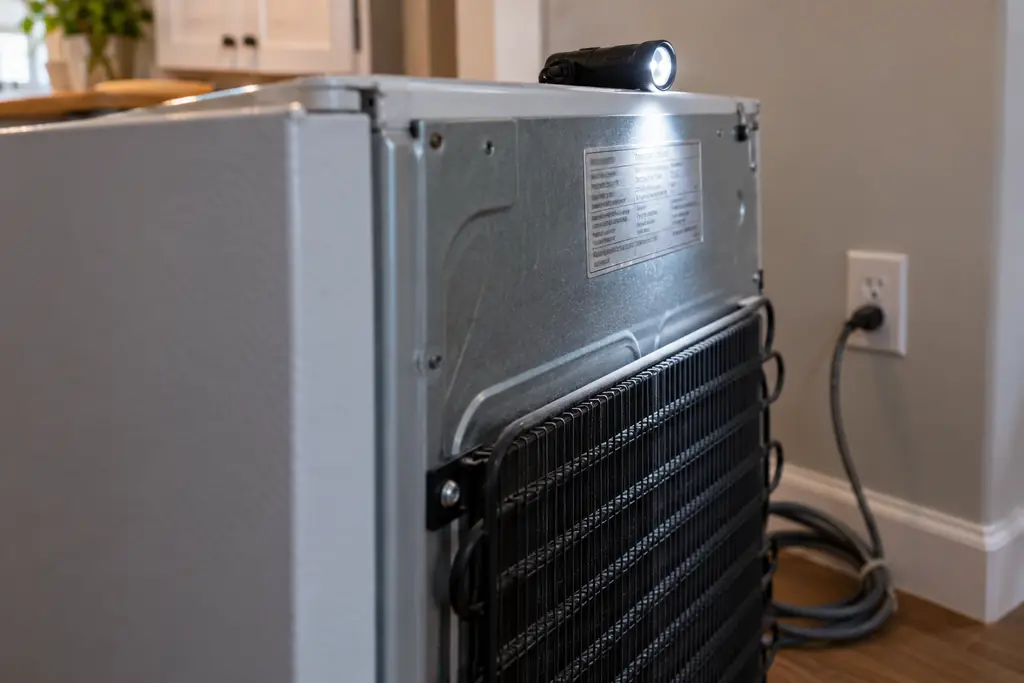
Three numbers decide it. The station's continuous AC output must cover the appliance's running watts, its surge rating must cover the start-up draw of anything with a motor or compressor, and its battery size sets how long it lasts. A fridge averaging 60 W runs about 13 to 15 hours on a 1,000 Wh station; a 1,500 W space heater runs well under an hour.
Runtimes are for one appliance on a full charge, with 80 to 90% of the battery reaching it. "Models that run it" counts the 13 current models in our database whose output and surge ratings cover it. Start-up figures are volts times starting amps (VA), as motor and compressor makers publish them; comparing them with surge watts errs on the safe side.
Kitchen
13 of 13 models run it
Full runtime table · Check on a specific model: Refrigerator (full-size, ENERGY STAR)
Kitchen
13 of 13 models run it
Kitchen
13 of 13 models run it
Check on a specific model: Mini fridge (compact, 1.6-4.5 cu ft, ENERGY STAR)
Medical
13 of 13 models run it
Check on a specific model: CPAP without humidifier (ResMed AirSense 10/11 class)
Medical
13 of 13 models run it
Full runtime table · Check on a specific model: CPAP with heated humidifier (ResMed AirSense 11 / 10)
Medical
13 of 13 models run it
Internet and electronics
13 of 13 models run it
Internet and electronics
13 of 13 models run it
Internet and electronics
13 of 13 models run it
Check on a specific model: Phone charging (USB power adapter)
Lighting
13 of 13 models run it
Check on a specific model: LED light bulb (60 W equivalent, 800 lumens)
Other
13 of 13 models run it
Check on a specific model: TV (LED/LCD, 50-55 in, ENERGY STAR)
Kitchen
12 of 13 models run it
Kitchen
12 of 13 models run it
Water and pumps
12 of 13 models run it
Water and pumps
10 of 13 models run it
Water and pumps
1 of 13 models run it (240 V models only)
Check on a specific model: Well pump, 1/2 HP submersible (240 V, 4-inch)
Water and pumps
0 of 13 models run it (240 V models only)
Check on a specific model: Well pump, 1 HP submersible (240 V, 4-inch)
Heating and cooling
13 of 13 models run it
Heating and cooling
13 of 13 models run it
Check on a specific model: Window air conditioner, 5,000-6,000 BTU
Heating and cooling
12 of 13 models run it
Check on a specific model: Window air conditioner, 8,000 BTU
Heating and cooling
12 of 13 models run it
Check on a specific model: Portable electric space heater (1,500 W)
Heating and cooling
13 of 13 models run it
Medical
13 of 13 models run it
Kitchen
13 of 13 models run it
Check on a specific model: Upright freezer (full-size, ENERGY STAR)
Kitchen
12 of 13 models run it
Kitchen
11 of 13 models run it
Kitchen
11 of 13 models run it
Kitchen
11 of 13 models run it
Kitchen
13 of 13 models run it
Kitchen
12 of 13 models run it
Check on a specific model: Electric pressure cooker (Instant Pot Duo, 3-8 qt)
Kitchen
11 of 13 models run it
Kitchen
11 of 13 models run it
Check on a specific model: Portable induction burner (single, 1,800 W)
Kitchen
12 of 13 models run it
Internet and electronics
13 of 13 models run it
Check on a specific model: Desktop computer (tower, without monitor)
Internet and electronics
13 of 13 models run it
Check on a specific model: Computer monitor (21-32 in, ENERGY STAR)
Internet and electronics
13 of 13 models run it
Check on a specific model: Gaming console (PS5, Xbox Series X|S)
Internet and electronics
13 of 13 models run it
Check on a specific model: Tablet charging (USB power adapter)
Internet and electronics
13 of 13 models run it
Check on a specific model: Wi-Fi security camera or video doorbell (each, wired)
Internet and electronics
13 of 13 models run it
Heating and cooling
13 of 13 models run it
Check on a specific model: Ceiling fan (52 in, ENERGY STAR, fan only)
Heating and cooling
13 of 13 models run it
Check on a specific model: Box fan or pedestal fan (16-20 in)
Heating and cooling
12 of 13 models run it
Check on a specific model: Portable air conditioner (10,000 BTU)
Heating and cooling
12 of 13 models run it
Check on a specific model: Dehumidifier (portable, 35-50 pint, ENERGY STAR)
Heating and cooling
0 of 13 models run it (240 V models only)
Check on a specific model: Central air conditioner, 3 ton (240 V split system)
Heating and cooling
1 of 13 models run it (240 V models only)
Check on a specific model: Electric water heater, tank (4,500 W elements, 240 V)
Other
12 of 13 models run it
Check on a specific model: Washing machine (top-load, 120 V)
Other
1 of 13 models run it (240 V models only)
Other
11 of 13 models run it
Other
13 of 13 models run it
Check on a specific model: Garage door opener (LiftMaster wall-mount)
Other
13 of 13 models run it
Other
11 of 13 models run it
Check on a specific model: Circular saw, corded 7-1/4 in (15 A)
Other
7 of 13 models run it
Medical
13 of 13 models run it
Medical
13 of 13 models run it
Check on a specific model: Power wheelchair or scooter charger (24 V, 8 A)
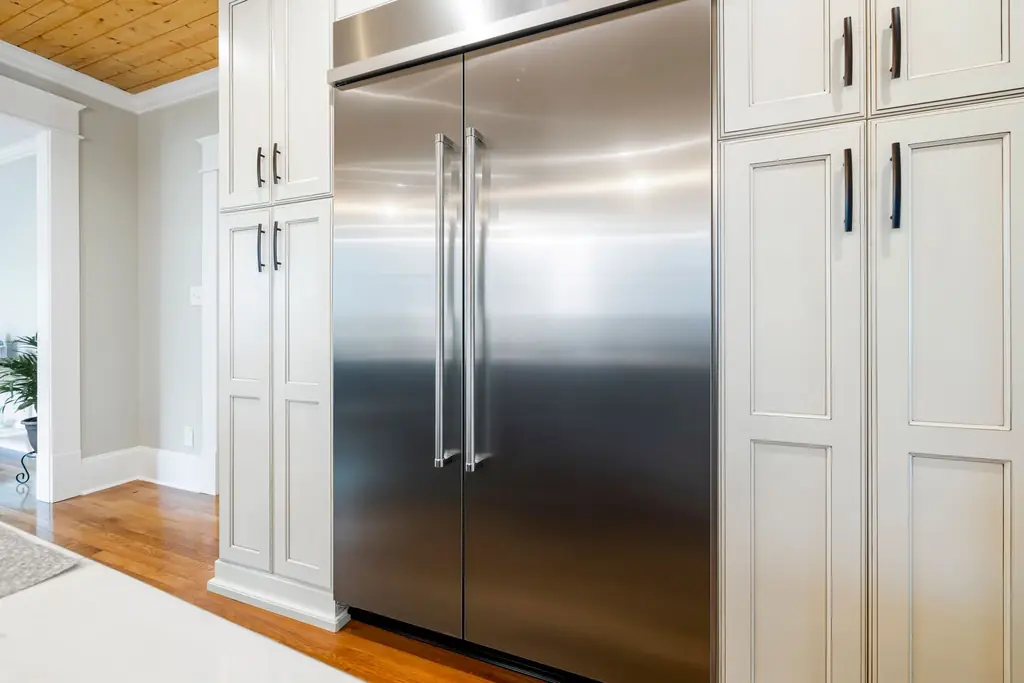
Estimate refrigerator backup runtime using EnergyGuide data, battery capacity, and startup power. Includes food safety guidance for outages.
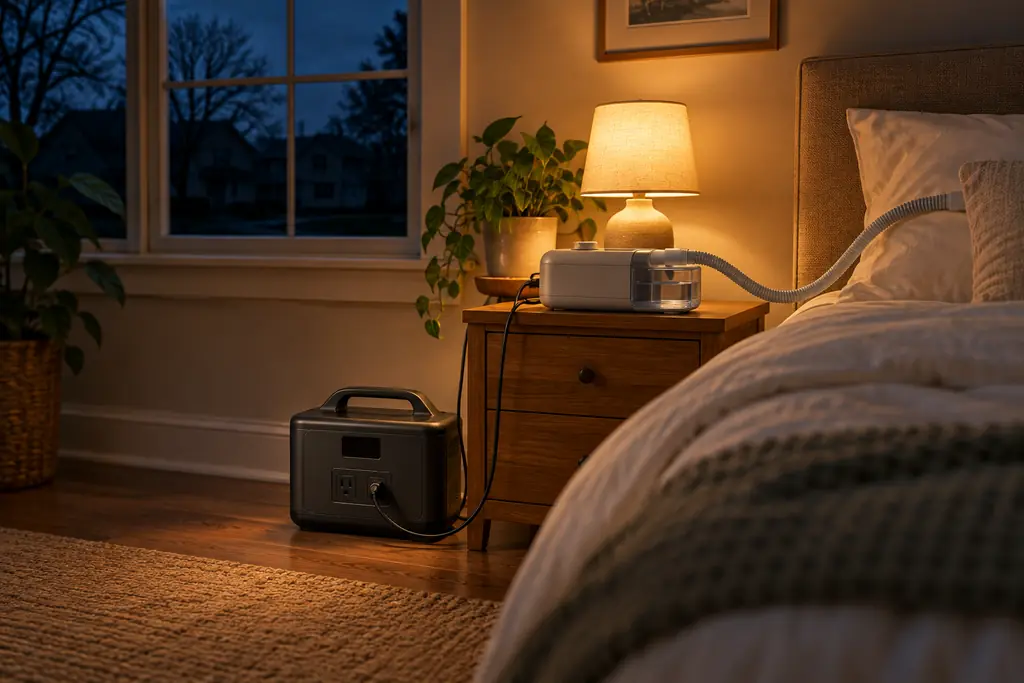
Estimate CPAP battery runtime with and without heated humidification, compare power requirements, and understand UPS and DC adapter limitations.
Every card above answers the same three questions for one appliance.
Motors and compressors, such as pumps, freezers and air conditioners, draw extra power for a moment when they start. A station's surge rating has to cover that moment. Where a maker publishes a start-up figure, we show it and check it against each model.
While running, the appliance's draw has to stay under the station's continuous AC rating. Add up everything you plan to run at the same time.
Battery size in watt-hours divided by the appliance's average watts gives the runtime. We assume 80 to 90% of the battery reaches the appliance after inverter losses, so every runtime is a range.
Heat-making appliances use the most energy. A 1,500 W space heater empties a 1,000 Wh station in about 30 to 40 minutes, and a coffee maker in about 50 minutes to an hour. Loads like these work better in short bursts or on a larger station.
Well pumps and central air conditioners often need 240 V. Only a few portable models in our database supply it, and their start-up draw still needs checking against the pump or air conditioner's nameplate.
The cards show one appliance at a time. To plan for a fridge, Wi-Fi, lights and a CPAP together, use the size calculator. It adds up your list and shows which models cover it for one day or longer.
Look for a label on the back or bottom, or in the manual. If it lists amps and volts instead, amps times volts gives a rough upper figure. A plug-in power meter gives the most accurate number for things that cycle, like a fridge.
Its compressor switches on and off. We use its average draw over a day, about 60 W for a full-size ENERGY STAR model, not the higher draw while the compressor runs.
Motors draw a short burst of extra power when they start. If that burst is higher than the station's surge rating, the station may shut off instead of starting the appliance.
Only models with 120/240 V output can. Most portable stations supply 120 V only.