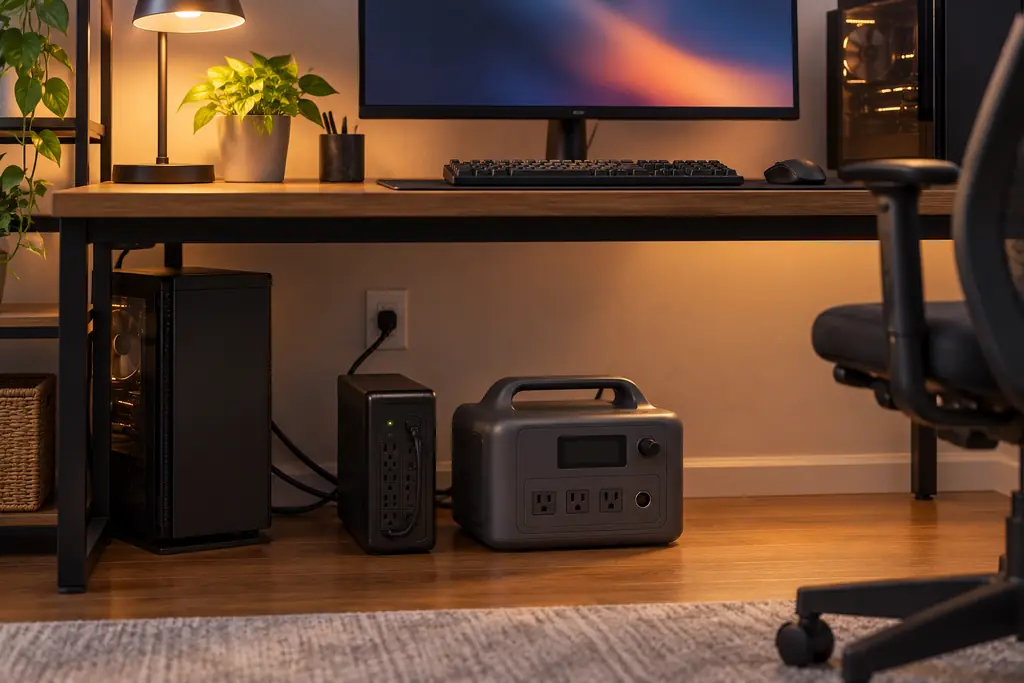
Can a portable power station replace a UPS?
Most power stations switch to battery in 10 to 30 ms, not instantly. What UPS, EPS and pass-through mean, what a 10 ms claim promises, and how to test yours.
Blog
Explainers on power station specs, rooftop solar in an outage, UPS mode, solar charging and day-to-day care, with every figure sourced.

Most power stations switch to battery in 10 to 30 ms, not instantly. What UPS, EPS and pass-through mean, what a 10 ms claim promises, and how to test yours.
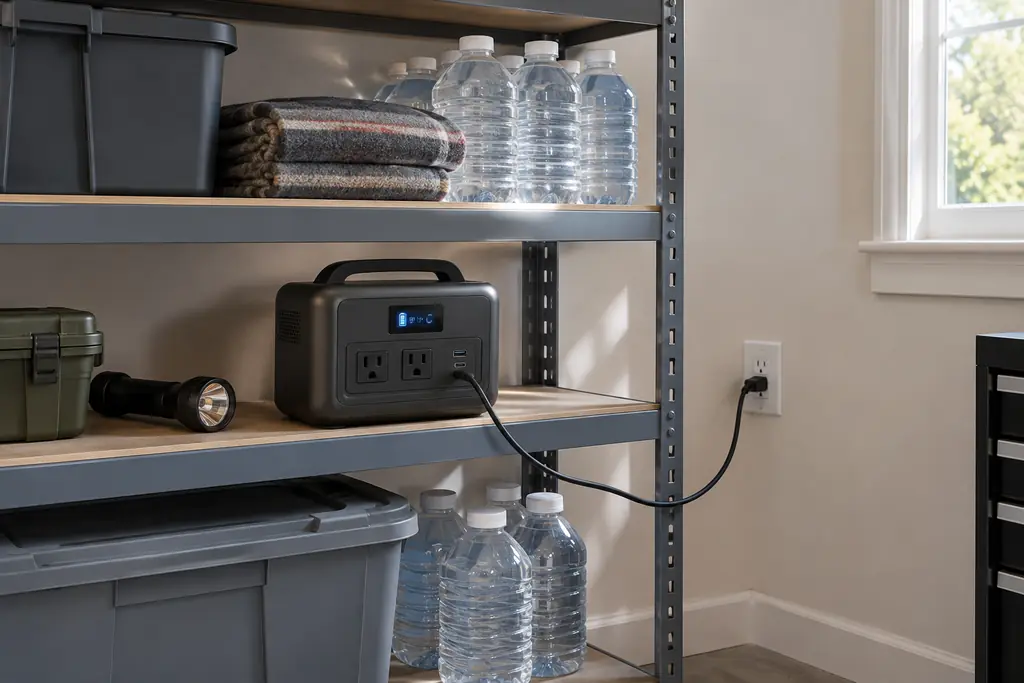
EcoFlow, Jackery, Anker, BLUETTI and DJI each give different advice on staying plugged in, storage charge and top-ups. What each manual says, model by model.

Grid-tied solar must stop feeding the grid within 2 seconds of an outage, even in full sun. Why, which systems still give daytime power and what a battery adds.
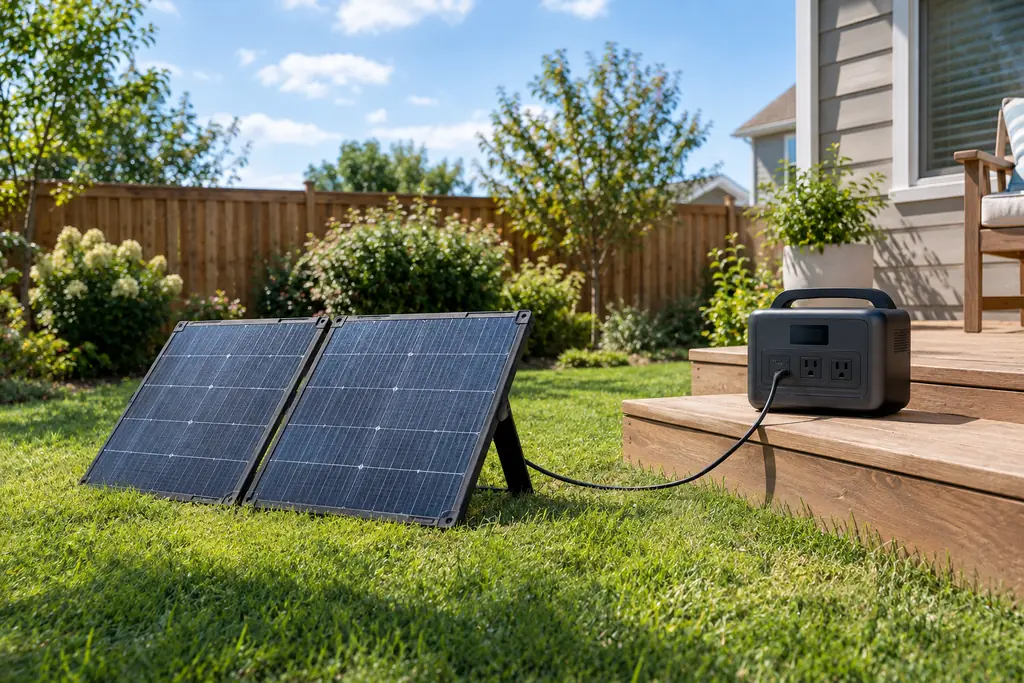
Per 1,000 Wh: about 184 W of panels in a Phoenix June, 823 W in a Seattle December, before charging losses. The maths, input limits and when one day won't do.
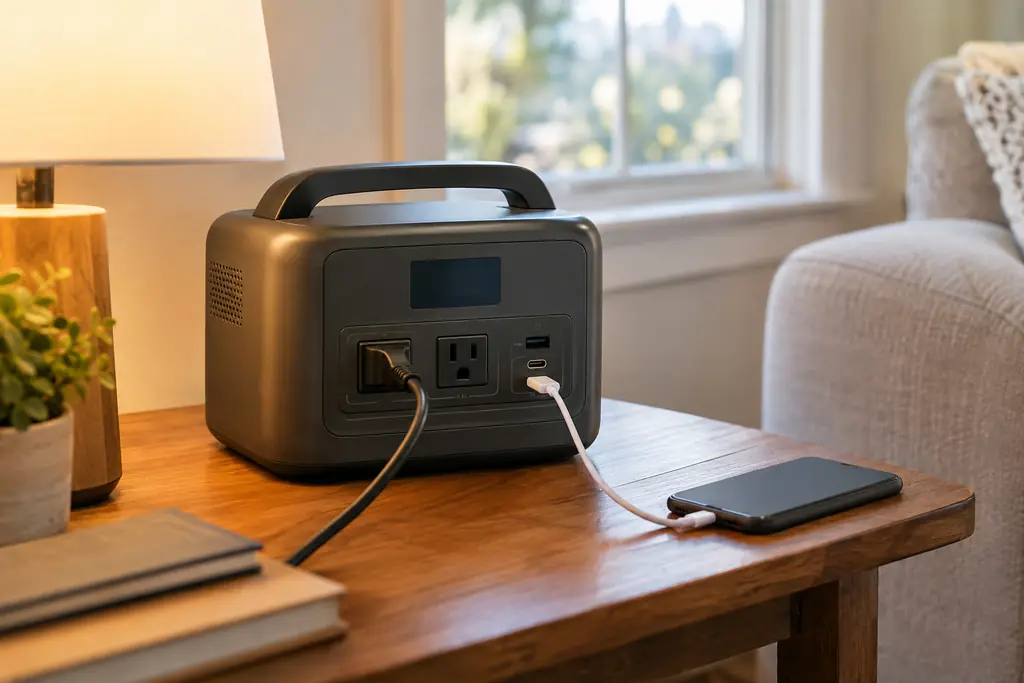
Watts are what a power station delivers at once, watt-hours what it stores and surge watts the short start-up peak. How to read all three on a spec sheet.
The guides help you choose and size a power station. The blog covers the questions around that choice: what the numbers on a spec sheet mean, what rooftop solar does when the grid goes down, and how to look after a station between outages. Each post links to the maker's own manual or a government source for its figures, and ends with the guide or tool that turns the answer into a decision.